Tuesday, May 6, 2014

Shooting Selfies in a Sandstorm, or How I Learned to Stop Worrying and Love the Wind

Yes, that's me, swathed in fashionable black and Tuareg silver, braving the 60mph gusts and near-whiteout conditions at White Sands in a pair of cheap swim goggles from Walmart.
It was another epic trip to White Sands National Monument.  Almost every spring for over 12 years my son, Max, and I have headed down to the breathtaking Tularosa Basin to spend a few days wandering the white dunes, by far the largest gypsum dune field on Earth. 
 
Usually I watch the weather like a hawk and time our trip for tranquil windless days...admittedly, a bit of a stretch for spring in New Mexico.  But not this year.  Instead, because we wanted to catch the last tour of the season to Lake Lucero, and because Max needed to schedule time off work well in advance, we were locked into the last weekend of April.  And as it turned out, they were predicting wind...lots of wind.  For several days in a row. 

We had arrived on Saturday, just as the wind was kicking up.  We got our room in Alamogordo and drove out to the sands to see how conditions were.  Gypsum sand and alkali dust were obscuring the horizon, and it quickly became obvious that if we wanted to preserve our eyesight we were going to have to find something with more coverage than sunglasses.  So we beat a hasty retreat, drove back to Alamogordo, took in a matinee of Captain America, and then went to Walmart (alas) to buy swim goggles, the only thing I could think of that might be readily available with good protection.  Then we headed back out to the dunes for the REAL wind.  This view is looking west towards the alkali flats and the San Andres mountains, which are completely obscured by flying sand and dust.   

Oh, and we also found that black rayon headscarf Max is wearing.  I prefer headscarves to hats, and Max decided he'd try it too, and since pretty much everything he'd brought to wear was black he looked like a pirate.  With a sock on his camera lens.  Let me tell you about the sock.  On the way down he was panicking a bit because he had brought his expensive camera and was worried about sand getting in the lens.  After thinking it over he decided to cut one of his socks in half and put it on his camera lens.  It worked, but it totally spoiled the fashion statement. 

On top of that, almost all my clothes were black too and we ended up looking very dramatic against the white gypsum sand.  I was wearing some of my old Tuareg silver to complete the effect...I figured it was lonely for the Sahara and would enjoy a good sandstorm. 
 
By the way, this was the very same day that the gamers and film crews were digging up the old ET video games at the Alamogordo landfill, if you heard about that.  Max, an avid gamer, tried in vain to explain to me exactly why that was important, but it was an ongoing source of amusement for us that weekend.  For example, the next morning I was reading the BBC World News on my phone over coffee and discovered that the ET story had made the headlines...that's right, the world news headlines.  A little later when we walked out of the hotel lobby to meet the Lake Lucero tour group, there was an actual DeLorean parked directly in front, with a lifesize ET riding shotgun and a flux capacitor sitting in the back seat.  I am not making this up. 
 
Onward to Lake Lucero...
And what a difference a day makes!  This is from the trail to the lake at an old ranch site, looking northwest towards the San Andres mountains.  The lake is only accessible by guided tour, since this part of the monument is shared by White Sands Missile Range.
The honey mesquite was in bloom.
Lake Lucero is the mother of the white sands.  Most of the time it is dry, but in very wet years it will fill with water.  You're looking at millions of shards of selenite crystals glinting in the sun.  Over millennia, the selenite (gypsum) washed down from the mountains and reformed as crystals in the alkaline mud of the lake bed.  As the lake dried, the soft crystals weathered out of the earth and gradually broke down into the grains of sand that form the white dunes to the northeast.  They're still doing it today.

Selenite crystals protruding from the lakebed.  These were only a few inches tall.
 
Heading back up the trail to the car.  You can see more selenite shards emerging from the ground at left.  What a beautiful day...but the winds were cranking up again.  Max wanted to revisit the Space Museum in Alamogordo after many years, so we spent the afternoon there and then went back to White Sands for...
...more wind.
It was actually an amazing experience to be out there for such a raw, elemental experience.  I found it to be surprisingly beautiful.  The wind obscured the horizon and enveloped us completely, absolutely wild and fierce...and yet, there is a gentleness and tranquility to White Sands that came through even in the midst of the sandstorm.
I love this image of Max under that huge sky.

Great.  Max, you look like a terrorist.  Except for the sock. 
The next morning, a perfect day!  Getting ready to set out on an all-day dune wander.  That's a great view of my Black Madonna tat, my portable shrine.  

This is what I dream of in the winter...a pure crystalline, blue-and-white world.  Glittering sand, blue sky, and silence.  Except for the jets from nearby Holloman AFB that fly overhead once in a while...which I actually love watching.  They're so fascinating, and Max always knows exactly what they are. 
A mysterious object near the edge of the dune field.  It turned out to be a huge chunk of Styrofoam, at least three feet to a side, transformed by wind and weathering into a work of art.  It must have blown in from the missile range to the west.  Max was fascinated. 
The afternoon light on the dunes.
At the end of the day we went to the eastern side of the dunes, where dunes are lower and full of beautiful plants.  This section is softer and gentler in feeling, and without wind there are countless wonderful little tracks in the sand from all sorts of creatures.  The shrub is a hoary rosemary mint.
The flowers of the hoary rosemary mint look like tiny lavender orchids.  It always amazes me how such exquisite and delicate plants can just shrug off the fierce sun and sandstorms.  Rosemary mint is so named because if you rub the leaves in the spring they smell like mint, and if you rub them in the fall they smell like rosemary.  It think it's my favorite plant of the dunes.
A last view of the afternoon.  Farewell to the dunes for another year...enough beef jerky and dried fruit.  Time for a margarita and some real food!
The sands gave us a surprising and sweet last farewell: an evening star, with a very happy solitary desert bee inside.  I've seen evening stars around Tucson but never knew they grew here.  They only open in the late afternoon and close at dusk. 
 
...That's it for White Sands! 
 
I'll be posting a blog on my shamanic project soon...

Tuesday, December 6, 2011

Desert Snowflakes

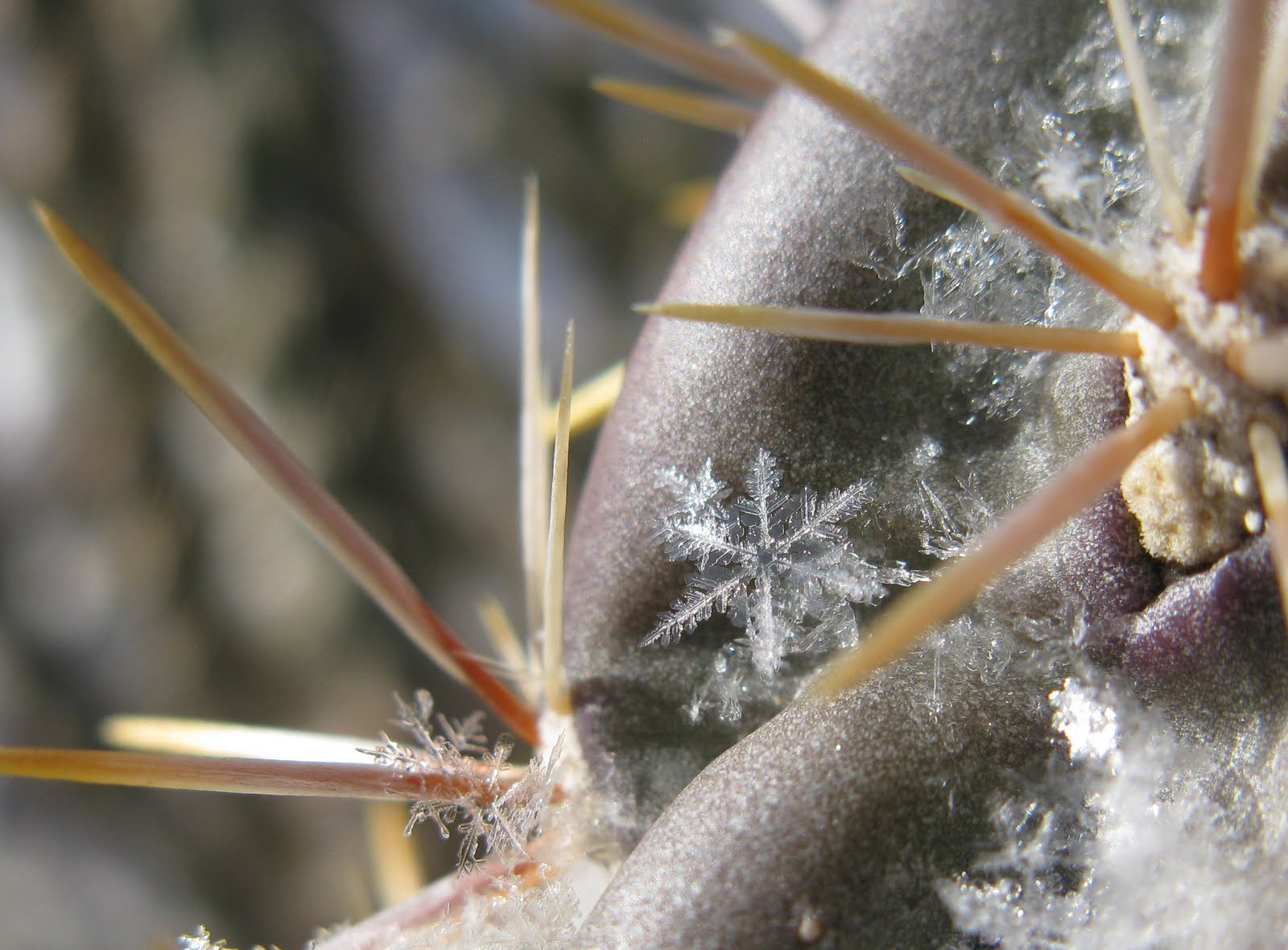
This morning, perfect snowflakes fell like sequins onto the cholla cactus outside my studio window. I went outside and discovered perfect crystalline shapes, and was able to capture a few with my little camera. Welcome, Winter, to our dry land! May these images remind you of the beauty that surrounds us all in this world, and of the peace and true meaning of our holiday season. Blessings to you all.


Saturday, October 1, 2011

Hiking in Ojito WildernessIt's been a while since I posted, so I thought I'd share some pictures that I took on a walk out at Ojito Wilderness yesterday so you can come along with me too. I always take dozens of photos every time I go out anywhere, but sadly, almost none of them make it into this blog. I'll try to remedy that in the future. Generally, given a choice of things to do, I tend to want to spend them in the studio. Creating a blog post takes me most of a work day.


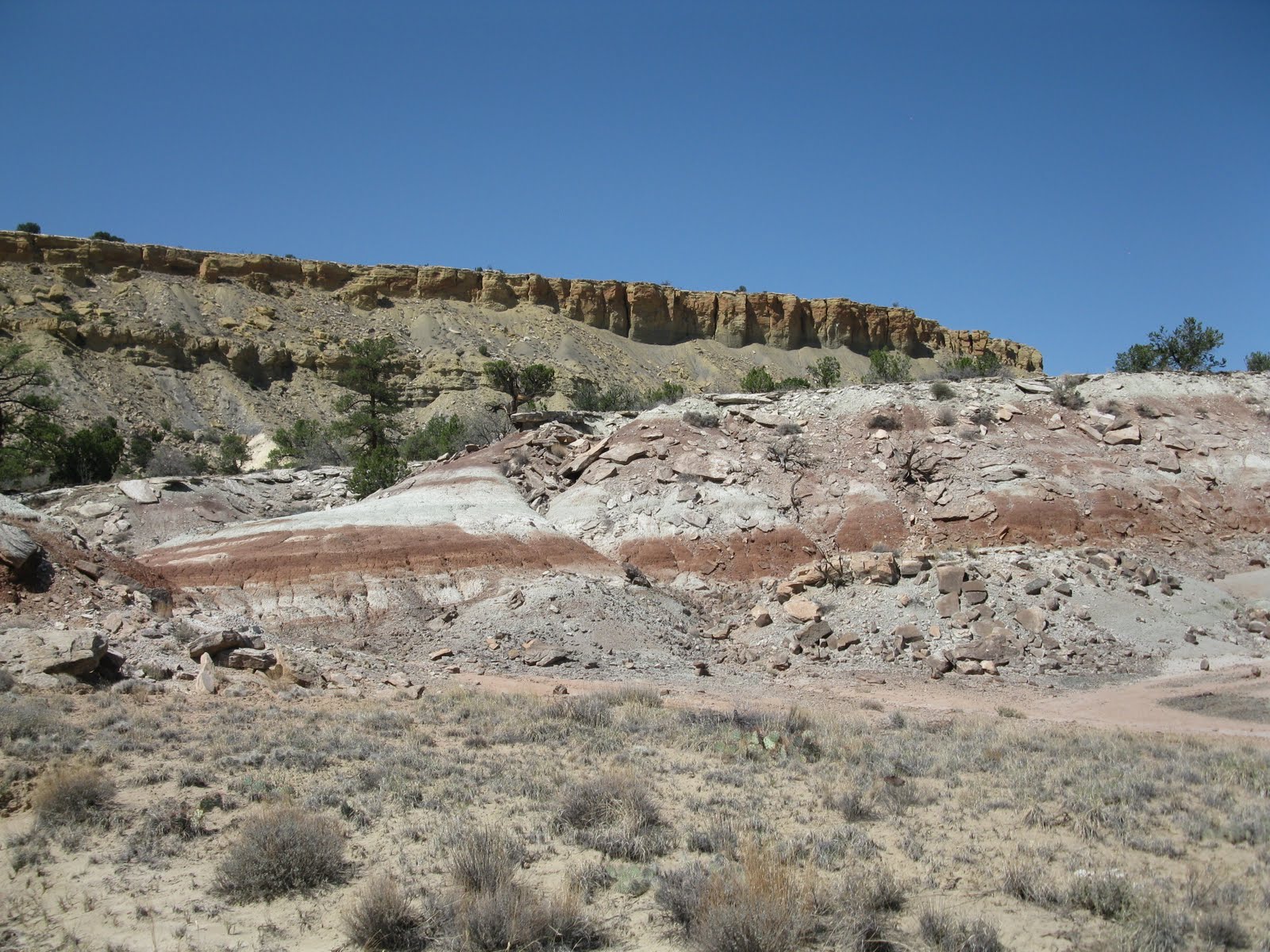
I've been walking in Ojito for over 15 years, way back when it was just a Wilderness Study Area rather than a full-blown wilderness. It's a fairly small area, about 25 miles northwest of us in northwest New Mexico, just at the edge of the Colorado Plateau. But Zia Pueblo land and public lands surround it, and it feels very remote. I took the first image above as I set out from the parking area, and it gives you a good idea of the kind of terrain that's out there: mesas with desert scrub, juniper and pinon, and cholla cactus on the flats. Remember that you can enlarge these pictures by clicking on them, and truly see the details of the place.


Here's a really nice cluster of hedgehog cactus I found on the flats. Maybe Claret Cup, or another variety. I'd have to see it blooming in the spring to know for sure.


One of the things I love about wilderness areas (as opposed to national parks, etc.) is that I can walk anywhere I damn well please. No signs or park nazis ready to pounce and hand out tickets for Walking Where You Shouldn't (this actually happened to me at Chaco once). So anyway I was wandering around looking at things and found this pinon leaking sap out of one side. I hope it's not bark beetles, but the shimmery sap was fascinating.


Junipers are my favorite trees, partly because of the beautiful forms they create while growing in this harsh climate. This one had bent over at about hip-height and had actually twisted around itself. I wonder why? Many years ago, someone had cut a limb off of it for firewood on the other side. I wonder if that had an effect on it taking the shape that it did.


A secret alcove found while exploring a small rock outcrop.


Making my way northward along the east side of the mesa, I came across this tiny patch of badlands. I love the colors and shapes of badlands; these had greenish, rust red and parchment-colored layers of clay.


Not far beyond I discovered a small community of hoodoos and Ponderosa pines. I always feel like I'm in the company of spirits when with hoodoos. There is another area of Ojito that I call the Sanctuary which is similar to this one, but much larger and it takes a longer hike to reach. So I will call this one the Little Sanctuary.


The light was perfect, even though the air was a bit hazy. There was a very light breeze but the sun was warm for the time of year. What I love most about these hikes is the silence. Just the wind in the trees, the occasional raven or jet high above. Silence is necessary for my well-being, but I find when I'm out on a walk like this, my thoughts can start running in infernal loops. So I try to think music rather than words; most of the time it helps.


I do sense presences around me as well, if I can shut down the mental chatter. The plants and earth formations are beings themselves. This area had the feeling of being a community of strong, distinct individuals, all centered around this beautiful large Ponderosa who felt like the leader of the clan.


This and other local pockets of Ponderosas are relict populations, left over from the cooler and wetter Ice Age a few years back, and they are growing at a lower altitude than most Ponderosas in the region. In Ojito they seem to prefer these sandy areas with the yellow-white hoodoos.


One way that you can identify a Ponderosa is by getting right up against a crevice in the bark with your nose and breathing in. It will smell just like vanilla.

This was taken from the shade of that Ponderosa, looking back toward the southeast. This hoodoo was like the fat auntie of the tribe.

Another view of Auntie, looking up at her caprock. The harder layer of caprock over a softer layer of sandstone prevents the soft material from eroding away, which is why they have such wonderful shapes. That, and because they're presences in the land. Do they dance together in the moonlight when no one is watching?


Another member of the hoodoo clan. I admit that I tend to take too many pictures and that this can get in the way of just being in the here and now with the land. But I see so much beauty here everywhere I turn, and forget it so easily after I get home. Hoodoos especially are photogenic. They change dramatically from every angle.


I sat for a while under the big Ponderosa and made a watercolor sketch of this smaller one nearby. There were tiny rodent bones scattered around, probably the remains of an owl's dinner, perfectly bleached by the sun. The shade was deliciously cool, and the wind in the pine needles sounded like forever.


The trail climbed around the side of the mesa to the north and west. This is the view from a ledge on the north edge, looking northwest. The Sanctuary that I was talking about earlier is spread out just below the highest mesa on the horizon over there. Cabezon peak, a huge volcanic plug, can be seen over the horizon on the left. We can also see it from our house, 60 miles away.


I went along a little further to this rock outcrop before turning back. Cabezon is framed between the small juniper and pinyon. Out beyond Cabezon about 50 miles away is Chaco Canyon.


Just a few feet away was the weathered remnant of a juniper. In the distance to the northeast, stormclouds were building over the Jemez range. They've had terrible floods up there since the monsoon rains washed out the huge area burned by the Las Conchas fire last summer. Jemez Pueblo is beyond the long red ridge on the right, and Route 550 heads toward Cuba, Chaco and the Four Corners along the side of the range on the left.


Desert sculpture. Another part of the same tree. Nothing evokes the Southwest like weathered juniper.


There was another smaller tree skeleton nearby. Likely these were struck and killed by lightning since they are on an exposed corner of a ledge. The velvety golden-brown balls in the center of the image are resin from the dead tree. You see these everywhere under dead trees, and I have guessed that they were formed when the trees burned and the heated sap came out in large globules. These were still soft on the inside, but they will harden over time and last for many years. If some is placed on burning charcoal, it makes the most exquisite incense, not unlike copal, but warmer and more balsamic.


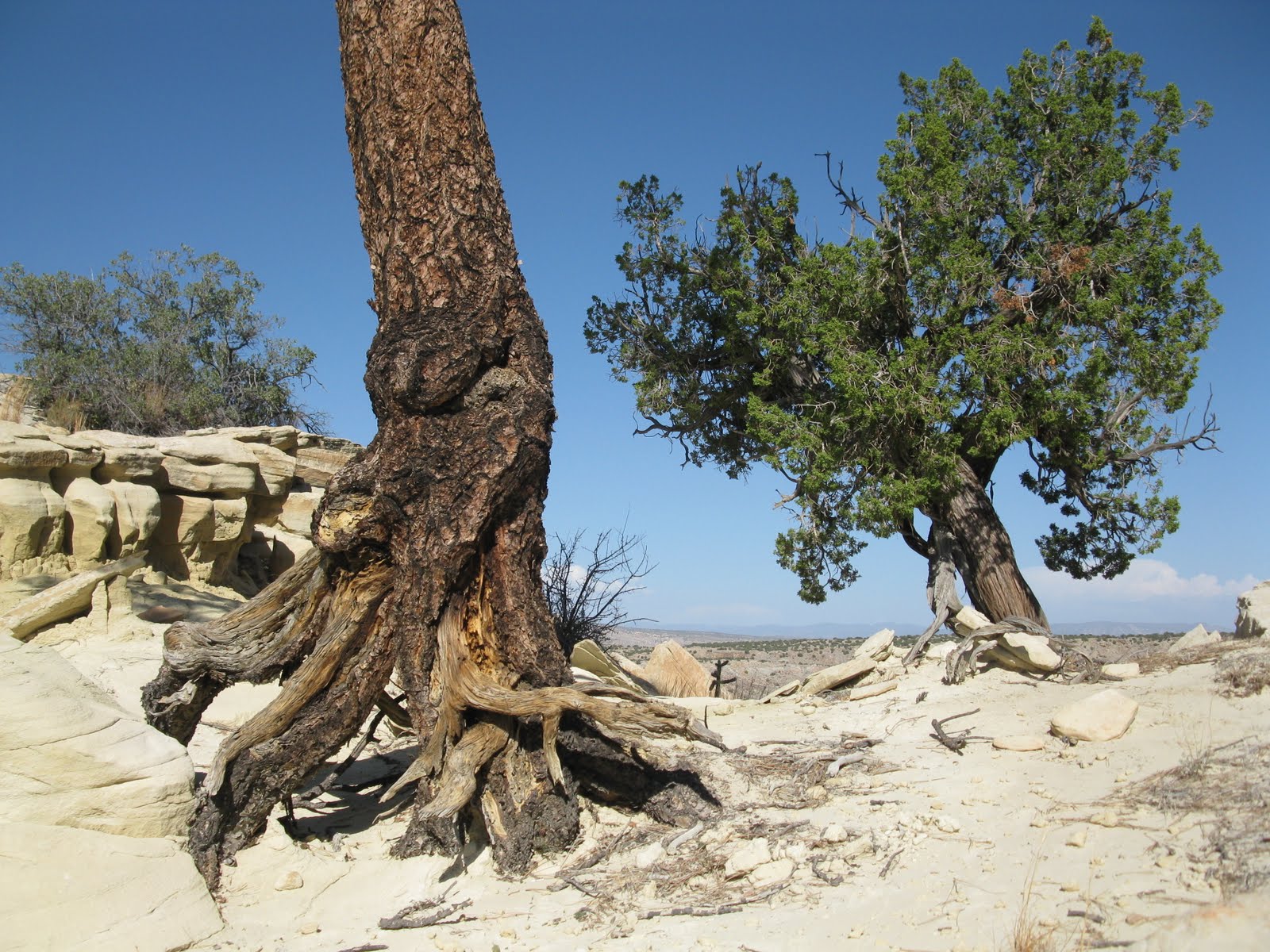
Another stunted Ponderosa looks like it's in the process of walking off somewhere. The soft sand has eroded out from under the roots over the years.


I never try to speed through when on a hike. I always meander along, examining everything. Sometimes you don't see things at all until you sit down on the ground. Near the walking Ponderosa I found these two very well-formed rhomboid calcite crystals.


On the return, the light had shifted and I took a few more images of the hoodoo clan at the Little Sanctuary.


Going back by the trail instead of lower down, I came upon this area of golden and white sandstone formations in the slanting afternoon sunlight. One of the best things about Ojito is that there is a tremendous variety of variation in the terrain and I always see something new.


It was a sculpture garden in stone, clay and sand.


The trail homeward. Beyond the mesa on the horizon, another blue ridge can be seen very faintly through the haze: the Sandia mountains, near my home.


Until next time...